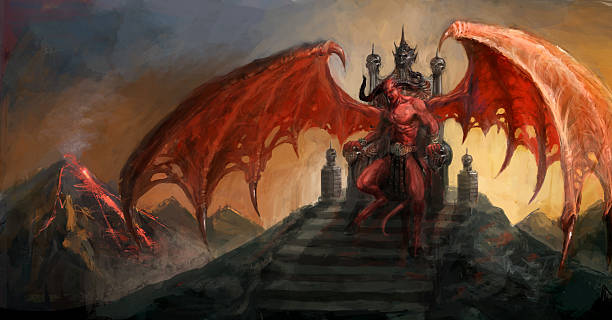
The Devil in Art and Literature: The Shadow of Satan

thegriffithdc.com – Throughout history, the figure of Satan has been a source of fascination and fear, embodying the ultimate evil and the seductive power of temptation. In art and literature, Satan has been depicted in various forms, from the grotesque and terrifying to the sublime and tragic. This article explores the multifaceted representation of the devil in artistic and literary works, tracing the evolution of his image and the impact it has had on culture.

The Origins of Satan in Art

The depiction of Satan in art dates back to early Christian times, where he was often portrayed as a monstrous creature, half-beast and half-human, designed to instill terror in the faithful. These early representations were influenced by the descriptions found in the Bible, particularly in the Book of Revelation, where Satan is described as a dragon.

Medieval and Renaissance Art

During the Middle Ages, the depiction of Satan became more elaborate, with artists drawing on a rich tapestry of religious and folkloric traditions. The devil was often shown as a grotesque figure with horns, a tail, and cloven hooves, presiding over the torments of the damned in hell.

The Renaissance brought a more humanized and sometimes even sympathetic portrayal of Satan. In Dante’s “Inferno,” for example, Satan is a tragic figure, frozen in the ice of the ninth circle of hell, chewing on the traitors Judas, Brutus, and Cassius. This portrayal reflects the humanist values of the time, which sought to understand the complexities of human nature, even in its most wicked forms.

Satan in Literature

In literature, Satan has been a recurring character, often serving as a foil to the protagonist or as a symbol of rebellion and free will. One of the most famous literary depictions of Satan is in John Milton’s “Paradise Lost,” where he is portrayed as a noble and charismatic leader of the rebel angels, embodying the tragic hero archetype.

The Romantic period saw a shift in the portrayal of Satan, with many writers and poets, such as William Blake and Percy Bysshe Shelley, viewing him as a symbol of rebellion against tyranny and oppression. This reinterpretation of Satan as a heroic figure challenged traditional religious views and reflected the political and social upheavals of the time.

Modern Interpretations

In the 20th and 21st centuries, the figure of Satan has continued to evolve, with artists and writers drawing on the devil’s rich symbolic potential to explore themes of evil, power, and morality. In film and popular culture, Satan has been depicted in various forms, from the demonic antagonist in horror movies to the mischievous trickster in television shows.

Conclusion

The representation of Satan in art and literature is a testament to the enduring fascination with the concept of evil and the complexities of human nature. From the terrifying demon of medieval art to the tragic hero of Renaissance literature, and the rebellious icon of Romantic poetry, Satan has been a versatile symbol that has adapted to the changing cultural and religious landscape. As society continues to grapple with the nature of good and evil, the figure of Satan remains a powerful and provocative presence in the arts.
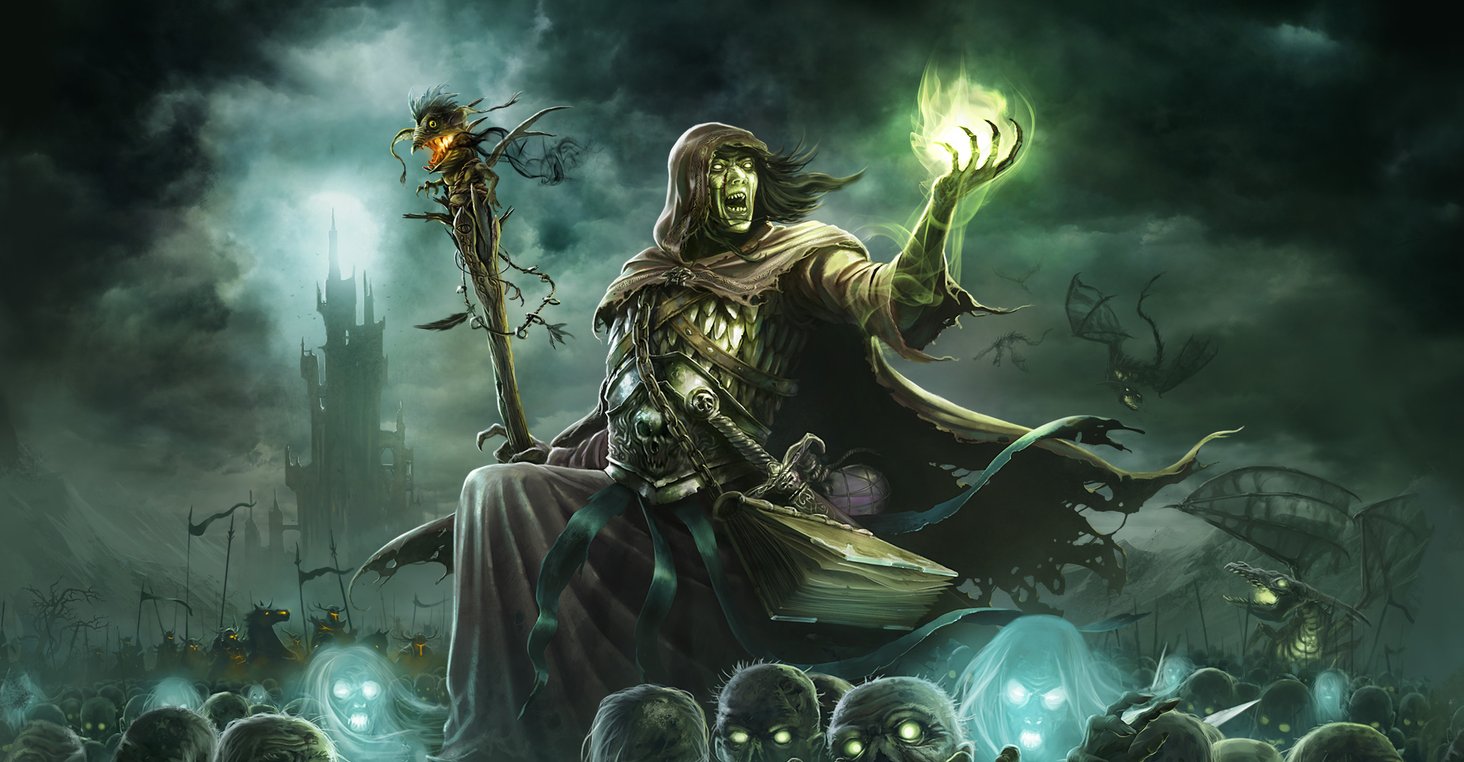
The Necromancer’s Pledge: A Journey into the Dark Arts

thegriffithdc.com – In the annals of fantasy literature and role-playing games, the figure of the necromancer often looms large, shrouded in mystery and wielding powers that straddle the line between life and death. Among these enigmatic practitioners, “The Necromancer’s Pledge” stands out as a pivotal concept, encapsulating the ethos, the risks, and the allure of necromancy. This article delves into the depths of this pledge, exploring its implications, its origins, and its impact on the worlds of fiction and imagination.

The Origins of the Necromancer’s Pledge

The Necromancer’s Pledge is a term that has been popularized in various fantasy settings, including novels, games, and online communities. It refers to the vow taken by those who choose to walk the path of necromancy, a discipline that involves the manipulation of death, the undead, and the forces that bind life and the afterlife. This pledge is not merely a formality; it is a profound commitment to a way of life that is often misunderstood and feared by the uninitiated.

The Ethos of the Pledge

At its core, The Necromancer’s Pledge embodies the principles that guide the necromancer’s actions. These principles can vary widely depending on the source material, but they often include a deep respect for the balance between life and death, a commitment to understanding the mysteries of the afterlife, and a vow to use necromantic powers responsibly. For some necromancers, this pledge also involves a promise to protect the living from the dangers that lurk beyond the veil of death.

The Risks and Rewards

Taking The Necromancer’s Pledge is not without its risks. The path of the necromancer is fraught with peril, both from the living who may view their practices as abhorrent and from the undead and other dark forces that the necromancer must learn to control. However, for those who are willing to face these challenges, the rewards can be immense. Necromancers gain access to powers that can turn the tide of battle, uncover ancient secrets, and even cheat death itself.

The Impact on Fantasy Worlds

In the realms of fantasy, The Necromancer’s Pledge has become a symbol of the complex moral landscape that defines the necromancer’s existence. It has inspired countless stories, from epic tales of heroism and villainy to more nuanced explorations of the ethical dilemmas faced by those who dabble in the dark arts. This pledge has also played a significant role in the development of necromancer characters in role-playing games, where players must navigate the consequences of their decisions in a world that is often unforgiving.

Conclusion

The Necromancer’s Pledge is more than just a vow; it is a gateway into a realm of magic and mystery that has captivated the imaginations of readers and gamers alike. It represents the duality of necromancy, a practice that is both feared and revered for its power to bridge the gap between the living and the dead. As fantasy literature and games continue to evolve, The Necromancer’s Pledge remains a testament to the enduring fascination with the dark arts and the complex characters who wield them.

The Haunted Carnival: Eerie Attractions and Freaks, Ghosts

thegriffithdc.com – In the shadowy realm where the thrill of the carnival meets the chill of the supernatural, there lies a world that captivates and terrifies in equal measure: The Haunted Carnival. This eerie amalgamation of freaks, ghosts, and eerie attractions has long been a staple of horror lore, a place where the veil between the living and the dead is at its thinnest, and where the bizarre and the macabre come to play.

The origins of the haunted carnival can be traced back to the early traveling fairs and circuses, where the line between entertainment and the supernatural was often blurred. It was a time when sideshows showcased the extraordinary, with performers labeled as “freaks” drawing crowds with their unique appearances and talents. However, as the years passed, these once-popular attractions began to wane, and the stories of their performers’ spirits lingering behind grew.

One of the most famous haunted carnival tales is that of the ghostly Ferris wheel. It is said that in a small town, a carnival set up on the outskirts, bringing with it a magnificent Ferris wheel that towered over the rest of the attractions. Tragedy struck when a mechanical failure caused a carriage to plummet to the ground, taking the lives of several riders. The carnival packed up and left in the night, but the Ferris wheel remained, its lights flickering on some nights as if it were still in operation, with the faint screams of the victims echoing in the air.

Another spine-tingling tale involves the haunted mirror maze. These mazes, with their endless reflections and disorienting paths, are said to be haunted by the spirits of those who got lost within their depths. Legend has it that if you look closely, you might see a reflection that doesn’t belong, a ghostly figure standing right behind you, reaching out to pull you into the mirror world forever.

The haunted carnival is also home to the eerie fortune teller’s tent. It is whispered that the fortune teller who once resided within was so powerful that she could see not only the future but also the past and present of other realms. Her untimely death, some say, was caused by a vision too horrifying to bear, and now her spirit remains, still offering prophecies to those brave enough to enter her tent.

Then there are the freaks, the performers who, in life, were celebrated and feared for their unique appearances and abilities. It is said that their spirits still roam the midways, seeking the adoration and terror of an audience that no longer exists. The bearded lady, the tattooed man, the contortionist, and the fire-eater—all are part of the carnival’s ghostly entourage, forever bound to the place that was both their home and their prison.

The haunted carnival is not just a collection of ghost stories and eerie attractions; it is a reflection of society’s fascination with the macabre and the unknown. It taps into our deepest fears and our insatiable curiosity about what lies beyond the veil of death. It is a place where the line between reality and the supernatural is blurred, and where the thrill of fear becomes the ultimate attraction.

Whether these tales are based on truth or are simply the product of overactive imaginations, the haunted carnival remains a powerful symbol of the human fascination with the dark and the mysterious. It is a reminder that sometimes, the most terrifying attractions are those that lurk in the shadows of our own minds.

An Enigmatic Marvel: Unraveling the Mystery of Stonehenge

thegriffithdc.com – Nestled in the rolling hills of Wiltshire, England, Stonehenge stands as an enduring symbol of human ingenuity and mystery. This prehistoric monument, with its massive stones arranged in a circular pattern, has fascinated people for centuries, sparking a myriad of theories about its purpose and construction. Despite advances in archaeology and technology, Stonehenge remains an enigmatic marvel, shrouded in the mists of time.

The origins of Stonehenge are as mysterious as the monument itself. Radiocarbon dating suggests that the earliest stones were erected between 3000 and 2000 BCE, during the Neolithic and Bronze Ages. The construction of Stonehenge was not a single event but a process that spanned over 1500 years. The monument underwent several stages of transformation, from an early circular earth bank and ditch to the iconic arrangement of massive sarsen stones and bluestones that we see today.

The stones of Stonehenge are as intriguing as their arrangement. The sarsen stones, which form the main structure, are made of sandstone and weigh up to 30 tons each. They were transported from the Marlborough Downs, about 20 miles away, an astonishing feat of engineering for a prehistoric society without the aid of wheels or domesticated animals capable of pulling heavy loads. The bluestones, smaller but no less mysterious, originate from the Preseli Hills in southwest Wales, over 140 miles away. How these stones were moved across such vast distances remains a subject of debate among archaeologists.

The purpose of Stonehenge has been the subject of much speculation. Early theories suggested it was a temple to the sun god, a palace, or a Roman temple. Later, it was thought to be a Druidic site, although we now know that the Druids were not present at Stonehenge until long after its construction. Modern archaeological evidence points to Stonehenge being a place of burial and possibly a sacred site for rituals and astronomical observations. The alignment of the stones with the solstices suggests an understanding of astronomy and a desire to mark significant celestial events.

One of the most compelling theories about Stonehenge is its connection to the movements of the sun and stars. The heel stone, a solitary stone outside the main circle, aligns with the sunrise of the summer solstice, suggesting that Stonehenge may have been used as a giant calendar or observatory. This alignment could have been crucial for agricultural societies, helping them to determine the right time for planting and harvesting.

Despite its grandeur, Stonehenge is not an isolated monument. It is part of a wider prehistoric landscape that includes burial mounds, processional ways, and other stone circles. This landscape, now a UNESCO World Heritage Site, indicates that Stonehenge was a central feature in a complex and interconnected prehistoric society.

The construction of Stonehenge also raises questions about the social organization of its builders. The effort required to quarry, transport, and erect the stones would have necessitated a significant amount of labor and organization. This suggests a society with the ability to mobilize large numbers of people for a common purpose, indicating a level of social complexity and possibly even a form of governance.

In recent years, advances in technology have provided new insights into Stonehenge. Geophysical surveys have revealed hidden structures and ditches, while DNA analysis has begun to shed light on the people who built and used the monument. However, many questions remain unanswered, and Stonehenge continues to captivate the imagination of people around the world.

The enigmatic Stonehenge stands as a testament to the ingenuity and mystery of our ancestors. It challenges us to understand the past and to appreciate the enduring legacy of those who came before us. As we continue to uncover the secrets of this ancient monument, Stonehenge remains a symbol of human achievement and an enduring mystery that bridges the centuries.

Superstition and Culture: Shape Supernatural Beliefs

Superstition and culture are deeply intertwined, with traditions often shaping our supernatural beliefs in profound ways. These beliefs can be traced back to ancient times when humans sought to explain natural phenomena through the lens of the supernatural. As societies developed, these explanations became part of cultural traditions, passed down through generations, and adapted to fit the evolving cultural landscape. Here’s how traditions shape our supernatural beliefs:

1. Historical Roots and Evolution

Many superstitions have their roots in ancient practices and beliefs. For example, the fear of the number 13 in Western culture is thought to originate from various sources, including the Last Supper, where Jesus was betrayed by Judas, the 13th guest. Similarly, the belief in ghosts and spirits can be traced back to animistic beliefs, where early humans thought that natural objects and phenomena were the result of supernatural entities.

2. Cultural Transmission

Supernatural beliefs are transmitted through cultural narratives, including folklore, myths, legends, and religious texts. These stories often contain moral lessons and explanations for natural phenomena, embedding superstitions into the cultural fabric. For instance, the concept of vampires in Eastern Europe has its roots in local folklore, which was later popularized in literature and media, influencing global perceptions of the supernatural.

3. Rituals and Practices

Cultural traditions often include rituals and practices aimed at warding off evil spirits or attracting good luck. These can range from simple gestures like knocking on wood to elaborate ceremonies. In many Asian cultures, the practice of feng shui is used to harmonize individuals with their environment, based on the belief that the arrangement of space can affect health and fortune.

4. Festivals and Celebrations

Many cultural festivals are centered around supernatural beliefs, celebrating events that are thought to have supernatural significance. For example, Halloween in the West is rooted in the Celtic festival of Samhain, where it was believed that the boundary between the living and the dead became blurred. Similarly, the Day of the Dead in Mexico is a time when it is believed that the souls of the departed return to earth, celebrated with offerings and altars.

5. Social Cohesion and Identity

Supernatural beliefs and the traditions associated with them can foster a sense of community and identity. Shared beliefs and practices can strengthen social bonds and reinforce cultural identity. For instance, the celebration of religious festivals or the observance of cultural taboos can serve as markers of group membership and identity.

6. Adaptation and Change

While some superstitions remain relatively unchanged over time, others evolve in response to new cultural influences or societal changes. The internet and global media have facilitated the exchange of supernatural beliefs across cultures, leading to the creation of new superstitions and the adaptation of old ones.

In conclusion, superstition and culture are intricately linked, with traditions playing a crucial role in shaping our supernatural beliefs. These beliefs are not static; they evolve and adapt, reflecting the dynamic nature of culture itself. Understanding the cultural context of superstitions can provide insights into the human psyche and our ongoing quest to make sense of the world around us.