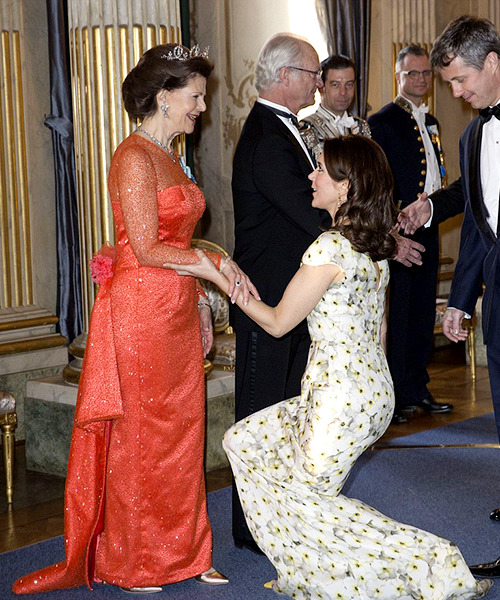
Advocacy and Royal Duty: Princesses and Patronage

thegriffithdc.com – In the intricate tapestry of monarchy, princesses have long played a pivotal role that extends far beyond the realms of ceremonial duties and public appearances. Their influence is profoundly felt in the sphere of patronage, where they champion causes, support organizations, and advocate for change. This article delves into the world of princesses and their engagement in patronage, exploring how this age-old tradition of royal duty has evolved into a powerful platform for advocacy and social impact.

The Tradition of Royal Patronage

Royal patronage is a time-honored tradition that dates back centuries. It involves members of the royal family lending their support and prominence to charities, organizations, and events, thereby raising awareness and encouraging public engagement. For princesses, this role is particularly significant, as it allows them to use their visibility and status to draw attention to important issues and to mobilize resources and support.

Advocacy and Social Impact

In recent years, princesses around the world have increasingly leveraged their positions to advocate for specific causes, turning the spotlight on issues such as education, health, poverty, and the environment. Their advocacy work is multifaceted, ranging from attending charity events and fundraising galas to visiting project sites and engaging directly with beneficiaries.

Princesses often choose causes that resonate with their personal interests or reflect their unique experiences. For instance, a princess who has overcome a health challenge might become a patron of organizations that support those with similar conditions. This personal connection not only lends authenticity to their advocacy but also inspires others to take action.

The Power of Visibility

One of the most potent tools at a princess’s disposal is her visibility. By associating themselves with a cause, princesses can significantly amplify its reach and impact. Media coverage of their engagements, speeches, and initiatives brings attention to the cause, while their endorsement can encourage donations and volunteerism.

Moreover, the digital age has expanded the scope of royal advocacy. Social media platforms allow princesses to connect directly with the public, sharing stories, raising awareness, and mobilizing support in ways that were previously impossible. This direct engagement fosters a sense of community and solidarity around the cause.

Challenges and Criticisms

Despite the positive impact of royal patronage, it is not without its challenges and criticisms. Some argue that the royal family’s involvement in advocacy can be superficial, with a focus on photo opportunities rather than substantive change. Others question the relevance of monarchy in modern society and the value of having unelected individuals serve as advocates for public causes.

Princesses and the royal family must navigate these criticisms carefully, ensuring that their patronage is meaningful and that their advocacy efforts are grounded in genuine commitment and action.

Conclusion

Princesses and patronage represent a unique intersection of tradition and modernity, where age-old royal duties are harnessed for contemporary advocacy and social impact. Through their engagement with causes and organizations, princesses have the power to inspire change, raise awareness, and mobilize support for important issues. As the world continues to evolve, the role of princesses in patronage and advocacy will undoubtedly adapt, but their commitment to making a difference will remain a constant in the ever-changing landscape of royal duty.

Ceremonies and Rituals: The Power and Pageantry of Kings

thegriffithdc.com – Throughout history, the institution of kingship has been marked by a rich tapestry of ceremonies and rituals that underscore the power and majesty of the monarch. These elaborate displays, steeped in tradition and symbolism, serve to legitimize the king’s rule, reinforce his authority, and foster a sense of unity among his subjects. From the grandeur of coronations to the solemnity of funerals, the ceremonies and rituals associated with kingship are a testament to the enduring allure of royal pageantry.

Coronations: The Ultimate Expression of Royal Power

The coronation is perhaps the most significant ceremony in the life of a king. It is a ritual that transforms a mere mortal into a divinely sanctioned ruler, imbued with the authority to govern. Coronations are meticulously choreographed events, often held in historic venues such as cathedrals or royal palaces, and attended by dignitaries from around the world. The ceremony typically includes the anointing of the king with holy oil, the presentation of regalia such as the crown, scepter, and orb, and the crowning itself, which symbolizes the king’s acceptance of the divine right to rule.

The pageantry of coronations is designed to awe and inspire. Elaborate processions, sumptuous robes, and the glitter of jewels create a spectacle that reinforces the king’s status as a figure set apart from his subjects. The rituals performed during the coronation are rich in symbolism, each gesture and object conveying a message about the king’s power and responsibilities.

Royal Entries: The King Comes to Town

Another important ritual is the royal entry, a ceremonial procession through which a king or queen makes a public entrance into a city or town. These entries were particularly popular in the medieval and early modern periods, serving as a means for the monarch to assert control over a territory and to demonstrate their wealth and power. The streets would be decorated with banners and triumphal arches, and the populace would turn out to witness the spectacle. The king would often be accompanied by a retinue of nobles, soldiers, and exotic animals, and the procession would be followed by feasting and entertainment.

Royal entries were also an opportunity for the monarch to engage with their subjects, dispensing justice, granting privileges, and reinforcing the bonds of loyalty and obedience. Through these public displays, the king’s authority was made tangible and personal to the people over whom he ruled.

Funerals: The Final Farewell

The death of a king is marked by ceremonies that are as solemn as they are grand. Royal funerals are elaborate affairs, designed to honor the deceased monarch’s life and legacy while also ensuring a smooth transition to the new ruler. The rituals surrounding a king’s death include lying in state, where the body is displayed for public mourning, and a state funeral procession that often includes a horse-drawn carriage, a military escort, and a cortege of mourners.

The funeral service itself is typically held in a place of great significance, such as a cathedral or a royal chapel, and is attended by heads of state and dignitaries from around the world. The rituals performed during the service are meant to reflect the king’s status and to ensure his soul’s safe passage to the afterlife, according to the religious beliefs of the time.

The Power of Symbolism

At the heart of royal ceremonies and rituals is the power of symbolism. Every element of these events—from the design of the regalia to the sequence of the procession—is carefully chosen to convey a message about the king’s authority, legitimacy, and connection to the divine. The use of religious imagery and rituals serves to sanctify the monarch’s rule, while the display of wealth and power is meant to impress and intimidate.

Moreover, these ceremonies are not just for the benefit of the king’s subjects; they are also a means of communicating with other monarchs and nations. The grandeur of a coronation or the solemnity of a royal funeral sends a message about the strength and stability of the kingdom, reinforcing its position on the international stage.

Conclusion

The ceremonies and rituals associated with kingship are more than just displays of power and pageantry; they are essential components of the institution itself. They serve to legitimize the king’s rule, reinforce his authority, and foster a sense of unity among his subjects. Through these elaborate performances, the monarchy maintains its mystique and its hold on the popular imagination, even in an age when many of the world’s monarchies have evolved into constitutional ones. The power and pageantry of kings, with their ceremonies and rituals, continue to captivate and inspire, reminding us of the enduring allure of royalty.

Tracing the Roots of the Japanese Imperial Family

The Japanese Imperial Family, with its rich tapestry of history and tradition, stands as one of the world’s oldest continuous hereditary monarchies. This family’s lineage is not just a testament to the endurance of a dynasty but also a reflection of Japan’s cultural and historical evolution. Tracing the roots of the Japanese Imperial Family is to embark on a journey through the annals of Japanese history, from its mythical origins to its modern-day relevance.

Mythical Origins

The roots of the Japanese Imperial Family are deeply intertwined with the country’s creation myths, as recorded in the ancient chronicles, the “Kojiki” (Records of Ancient Matters) and the “Nihon Shoki” (Chronicles of Japan). According to these texts, the family descends from the sun goddess Amaterasu, through her grandchild Ninigi-no-Mikoto, who descended from heaven to rule over the Japanese islands. This divine lineage has been a cornerstone of the family’s legitimacy and the basis for the Emperor’s title as the “Heavenly Sovereign.”

Historical Evolution

Moving from myth to history, the first recorded Emperor, Jimmu, is said to have ascended the throne in 660 B.C., marking the beginning of the Yamato dynasty. However, the historical accuracy of Jimmu and the early emperors is a subject of debate among historians. It is generally accepted that the Imperial Family’s verifiable history begins in the 5th century A.D., with Emperor Ojin, whose reign is supported by both historical records and archaeological evidence.

Through the centuries, the Imperial Family navigated the complex currents of Japanese history, including periods of significant political influence, such as under Emperor Temmu in the 7th century, who played a crucial role in the creation of the “Yamato state” and the codification of its laws. However, the family’s political power waned over the centuries, especially during the shogunate periods when military leaders held de facto control over the country.

Modern Era

The Meiji Restoration of 1868 marked a significant turning point for the Imperial Family. Emperor Meiji was restored to political power, leading to a period of rapid modernization and imperial expansion. This era saw the Imperial Family being placed at the center of a newly constructed national identity, with the Emperor revered as a living god and the embodiment of the nation’s soul.

The end of World War II and the subsequent occupation by Allied forces led to a dramatic transformation in the role of the Imperial Family. Emperor Hirohito, in a historic radio address, renounced his divine status, and the post-war constitution redefined the Emperor as “the symbol of the State and of the unity of the people.” This shift marked the beginning of a new era for the Imperial Family, focusing on ceremonial duties and public service.

Today’s Imperial Family

Today, the Japanese Imperial Family continues to play a significant role in Japanese society, albeit largely ceremonial. Emperor Naruhito, who ascended to the throne in 2019, and his family engage in various public duties, including attending state functions, supporting charitable causes, and promoting cultural and international exchanges. The family’s lineage, stretching back centuries, serves as a living bridge between Japan’s ancient past and its modern identity.

Conclusion

The lineage of the Japanese Imperial Family is a testament to the enduring nature of tradition and the adaptability of an institution that has survived through the ages. From its mythical origins to its modern-day role, the family’s history is a reflection of Japan’s journey from a collection of warring states to a unified nation, and finally, to a key player on the world stage. As Japan continues to evolve, the Imperial Family remains a symbol of continuity and national pride, embodying the spirit of a nation that honors its past while striding confidently into the future.